Off The Pitch Gossips
FIFA’s U-turn on water bottle farce shows exactly what this World Cup is really about

Last Updated on 7 June 2026
The World Cup 2026 is already under fire. Extortionate ticket prices, logistical chaos, and political interference have all made headlines. Yet somehow, FIFA still managed to find new ways to embarrass itself.
Days before kick-off, the governing body quietly banned fans from bringing water bottles into stadiums, during a summer tournament, in North American heat. It took politicians, fan groups, and a global backlash to force a U-turn.
Even then, FIFA only went halfway for the World Cup 2026.
The water-bottle debacle: A ban so bad it took politicians to kill it
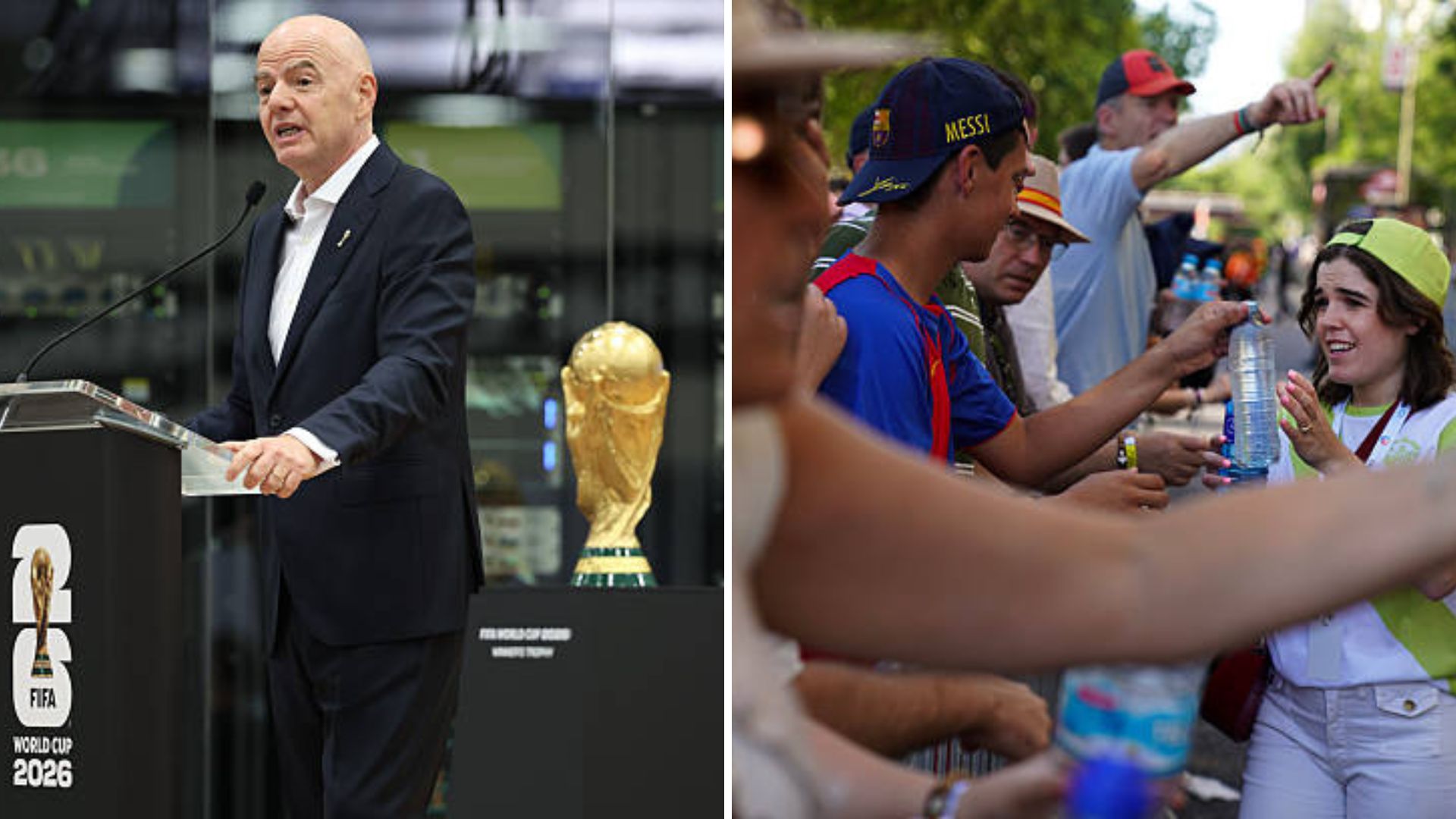
Originally, FIFA permitted fans to carry empty, transparent reusable bottles of up to one litre into venues. Then, on June 2, it simply scrapped that policy. No fanfare. No explanation beyond vague “safety and security” language.
Suddenly, fans heading into open-air stadiums, some waiting hours before kick-off in extreme heat, had no way to bring their own water. The backlash was immediate. Toronto Mayor Olivia Chow, whose city hosts six matches, called it a “pure money grab.”
New York Mayor Zohran Mamdani warned that fans should never “fear being priced out of being hydrated” as per Al Jazeera. UK Prime Minister Keir Starmer went further. He called the decision flat-out “wrong” and said it was “about making money.” He was right.
Without personal bottles, fans would have had no choice but to buy water inside the stadium, at prices FIFA itself admitted would “remain consistent with other events held at each stadium.” At a World Cup, that is not a reassurance. That is a warning.
FIFA’s U-turn that was not quite a U-turn
Eventually, FIFA caved. It announced that fans could bring one sealed, disposable, 20oz (590ml) plastic bottle into venues in the US and Canada. Reusable bottles, however, remained banned. So fans still cannot refill. They still cannot bring a full litre.
And Mexico’s stadiums received no updated guidance at all. Mamdani welcomed the reversal, along with his move on $50 tickets but the bigger picture remains damning. FIFA introduced a dangerous policy less than two weeks before a major tournament.
It took heads of state to reverse it. And even then, the governing body kept restrictions that serve commercial interests over fan welfare. This was not an administrative oversight. It was a trial balloon: floated quietly, hoping nobody would notice. People noticed.
That FIFA needed external pressure to do the obvious right thing says everything about where its priorities actually lie. The tournament starts June 11. The dysfunction, clearly, already has.