Arsenal
The players who spoke up: Premier League stars on depression and mental health

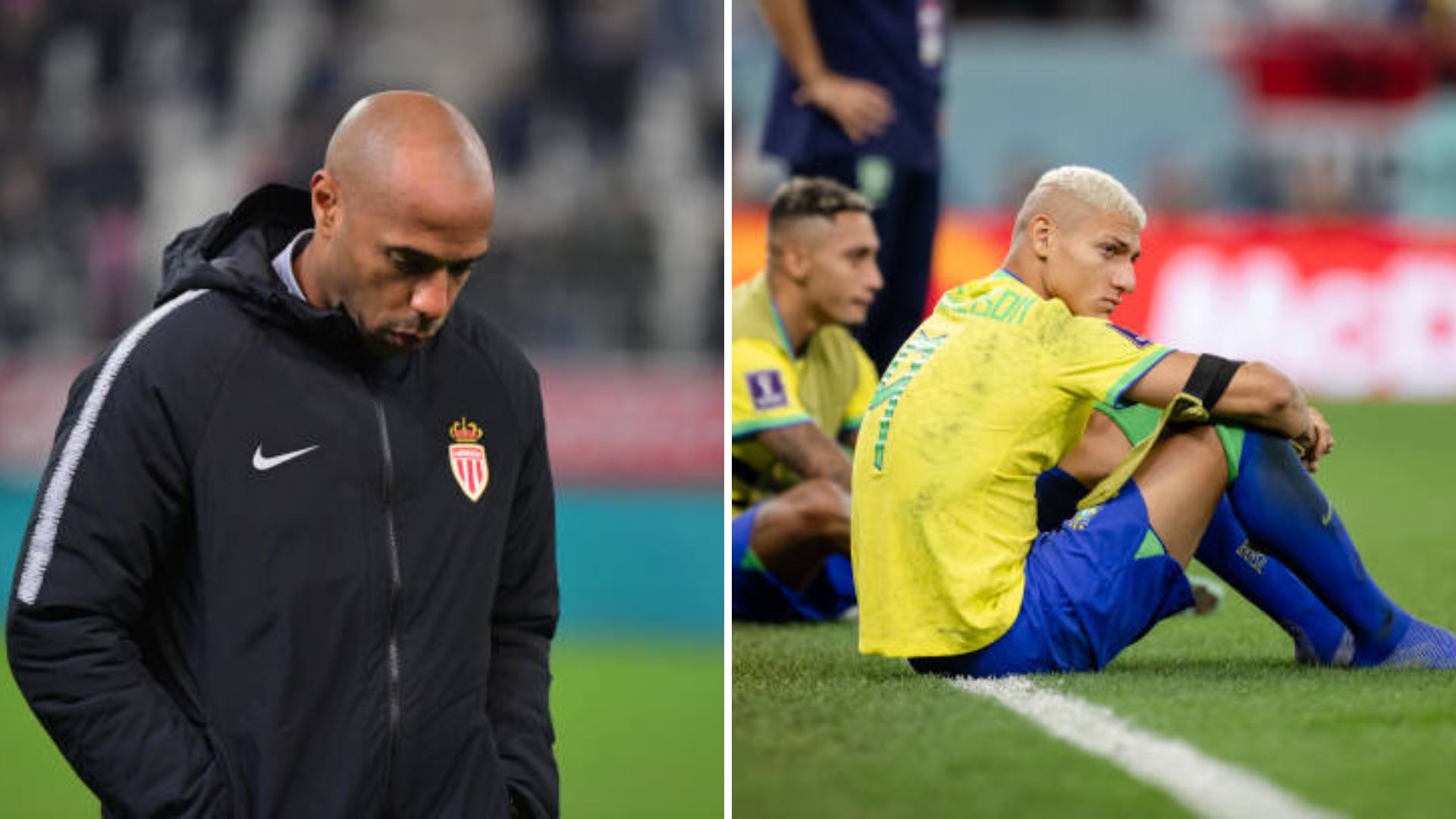
Elite football is sold as the dream, but behind the goals, the glory and the eight-figure contracts, a growing number of Premier League players have found the courage to speak openly about depression, anxiety and mental collapse.
Their willingness to go public has helped shift the conversation, but it has also exposed how poorly equipped the game remains to protect its players.
Here are five Premier League stars who refused to stay quiet.
Thierry Henry
Few admissions have landed quite as heavily as Thierry Henry’s appearance on The Diary of a CEO podcast in January 2024. The Arsenal legend and France’s all-time top scorer, explained how he had spent his entire playing career in a state of depression without ever recognising it.
He described crying “almost every day” during the pandemic, a moment that forced him to confront years of suppressed pain rooted in his relationship with a demanding father who was openly critical of him from childhood.
“Did I know it? No. Did I do something about it? No,” he said, adding that his father’s relentless pressure helped forge the athlete but damaged the human being. The revelation reframed a career many considered the pinnacle of Premier League football.
Danny Rose
Danny Rose became one of the most important voices in English football when he publicly disclosed his depression diagnosis ahead of the 2018 World Cup. The ex-Spurs leftback had endured a brutal run.
One involving a serious knee injury, his uncle’s suicide, his mother being racially abused, and a shooting involving his brother, all within a short period. “It led to me seeing a psychologist and I was diagnosed with depression, which nobody knows about,” he said.
What followed his disclosure was, in many ways, just as revealing as the disclosure itself. A prospective buying club reportedly asked to meet him simply to check he was not,”crazy.” Rose later explained that football had “a long way to go” on mental health a verdict that still stands.
Aaron Lennon
In May 2017, Aaron Lennon became the first high-profile Premier League player to be detained under the Mental Health Act when he was hospitalised in a state of severe distress.
The former Tottenham and England winger had been struggling to get out of bed and had lost all interest in football. The very sport that had defined him since childhood. Lennon revealed that without the mental health services, he might not be here to tell his story.
In the years since, Lennon has stepped back from the spotlight. However, he has emerged as a quiet advocate for mental health awareness. Lennon has argued that the culture of toughness in the game actively prevents players from seeking help early enough.
Dele Alli
Dele Alli’s interview on The Overlap in July 2023 was one of the most shattering pieces of television football has ever produced. The former England midfielder revealed he had spent six weeks in a US rehabilitation facility for addiction, mental health and trauma.
He had developed a dependency on sleeping pills, taking them “just to escape from reality.” In fact, he described a childhood marked by sexual abuse that he had spent years trying to bury.
At just 24, he stood in front of a mirror and contemplated whether he could retire. “That hurt me a lot,” he said. “That was another thing I had to carry.” The response from football was overwhelmingly supportive. Proof, perhaps, that the game’s attitude is slowly changing.
Richarlison
The most recent, and perhaps the most impactful, disclosure on this list came from Richarlison. His public unravelling in late 2023 became a turning point for Brazilian and Premier League football alike.
The Tottenham striker had scored just four goals in 40 appearances since his £60 million move from Everton. He was pictured in tears after being substituted in a Brazil qualifier. Later, Richarlison revealed that the collapse was not primarily about football.
Personal betrayals off the pitch had brought him to a point where he told his father, the man who had sacrificed everything for his career, that he wanted to give up. Therapy, he said, was “the best discovery I’ve ever had in my life.”
When he returned to the Brazil squad, a psychologist had been added to the national team setup for the first time. “I can say, seek help,” he said. “Because it saved my life.”