Opinions & Analysis
What wins the World Cup in 2026? Breaking down all four semi-finalists

Last Updated on 13 July 2026
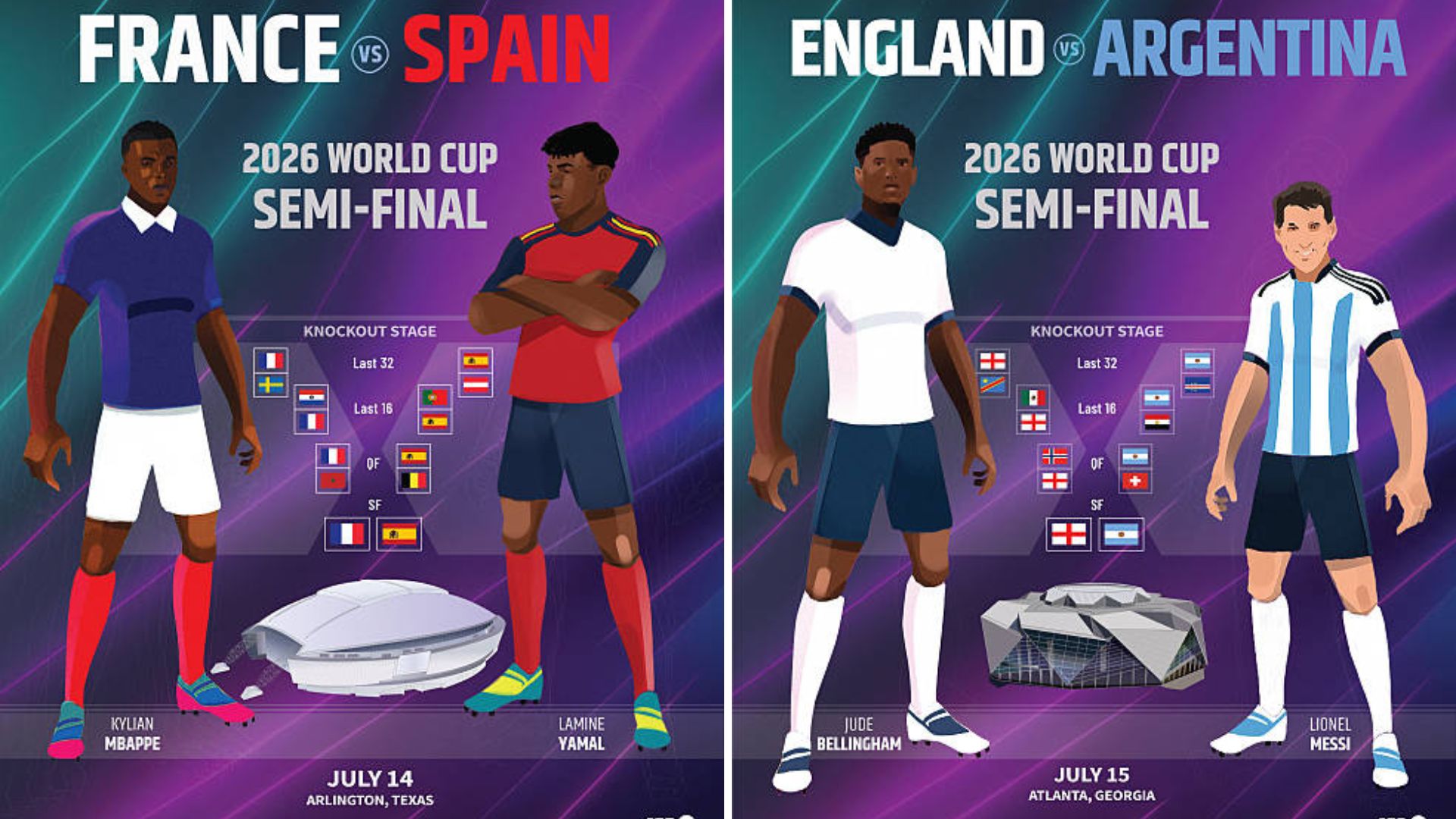
The World Cup has reached its final week, and the numbers finally match the seedings. France, Spain, England, and Argentina occupy the last four spots.
Each side arrives with a distinct statistical fingerprint. France, clearly, have the best attacking resources at their disposal. Argentina are fueled by an insane motivation and have the greatest player of all time. England have the best coach. Spain have the most balanced side.
Below, we break down each contender’s style, their expected-goals record, and their set-piece threat, then weigh what it would actually take for each to lift the World Cup trophy in less than a week.
France
France carries the scariest attacking numbers of the final four. Their run has produced 14 goals from just 8.17 expected goals, an overperformance of nearly six goals. That gap tells two stories at once. First, Kylian Mbappe and this attack finish with ruthless precision.
Second, teams rarely sustain that level of overperformance across seven matches, so regression could arrive at any moment. Still, France head into the semi-final full of confidence after brushing aside Morocco 2-0 in the quarter-final, with Mbappe scoring a worldie.
Didier Deschamps’ side also handles set pieces well, using its aerial presence at both ends of the pitch. Defensively, though, questions remain. If Spain finds gaps in transition, France’s back line could get exposed the way Belgium exposed Spain’s.
For France to win it all, their finishing needs to hold up under sterner opposition, not just against Morocco. They also need discipline at the back. Ultimately, France’s path to the title runs through control: dominate midfield, convert half-chances, and nobody stops them.
However, if their finishing regresses toward that expected-goals number, this final week gets tighter than the scoreline suggests. Against Spain specifically, France must match intensity without opening space in behind, because they will punish any hesitation instantly.
Spain
Spain bring the most statistically dominant defensive record left in the tournament. Before Belgium finally broke through, La Roja had gone 649 consecutive minutes without conceding, the longest defensive streak in World Cup history.
Even after Belgium’s equalizer, Spain still own one of the best defensive campaigns ever recorded, having conceded just two goals across the entire competition. Meanwhile, their attack has matured beyond possession for possession’s sake.
Lamine Yamal provides directness, Pedri dictates tempo, and Mikel Merino keeps delivering off the bench, scoring decisive late goals against both Portugal and Belgium. Consequently, Luis de la Fuente has built a squad that wins games in more than one way.
For Spain to lift the trophy, their defense must reset quickly after conceding for the first time in six matches. Belgium proved they aren’t unbreakable, and France will target that exact same seam. Still, Rodri anchors midfield, and that platform limits clean opportunities for opponents.
If Spain restores its defensive discipline and Yamal shows up, they could do it. Otherwise, if fatigue creeps in after that setback, France could punish every mistake. Ultimately, balance decides Spain’s fate: control territory first, then finish clinically when the chances arrive.
England
England’s route to the semi-final has been anything but smooth, yet Jude Bellingham keeps rescuing them regardless. He has scored six non-penalty goals this tournament, matching Gary Lineker’s long-standing England record from 1986.
Both of England’s last two knockout wins needed extra time, first against Mexico, then against Norway, and both required second-half comebacks. That pattern reveals something important: England struggle to close games out early, but they clearly don’t panic under pressure.
Harry Kane, meanwhile, keeps adding to his considerable World Cup legacy, even while playing a supporting role to Bellingham lately. Set pieces have proven costly for opponents facing England, since deliveries from wide areas consistently create danger.
However, defensive lapses have crept in, particularly against counter-attacks. For England to win, Thomas Tuchel needs more control in midfield, not just individual brilliance late on. Relying on Kane and Bellingham works, but Argentina punish hesitation far less forgivingly.
Therefore, England must start faster and defend set pieces better under sustained pressure. If they manage that, their attacking talent gives them a puncher’s chance against anyone left standing.
Still, history suggests knockout football rewards control over chaos, so England’s biggest test isn’t scoring goals anymore. It’s avoiding the slow starts that keep dragging them into extra time.
Argentina
Argentina enter as defending champions, and Lionel Messi has made sure everyone remembers why. He has scored eight goals this tournament, driving Argentina’s expected-points total to the highest mark of the final four.
Their win over Switzerland also needed extra time, but goals from Alexis Mac Allister, Alvarez, and Lautaro Martinez eventually settled it 3-1. That squad depth matters enormously in the deciding stages, since Messi doesn’t need to score every match for Argentina to advance.
Defensively, Argentina stay organized without matching Spain’s historic numbers, conceding periodically but rarely collapsing under sustained pressure. Set pieces have also been a quiet strength, with Mac Allister and Martínez both dangerous from dead-ball situations.
For Argentina to defend their title successfully, Messi’s influence needs support. Fortunately, Alvarez & Martinez have both stepped up when required, easing the pressure on their captain. Against England specifically, Argentina’s calmness in knockout moments could prove decisive.
After all, the English have needed late drama in both of its last two matches. Meanwhile, Argentina’s experience from 2022 gives them a psychological edge no other semi-finalist can claim.
Ultimately, if Messi conjures one more moment of magic while his supporting cast keeps finishing chances, Argentina becomes the first team to win back-to-back World Cups since Brazil in 1962. That history alone makes them dangerous heading into Atlanta.