International Teams
Politics already ruining the World Cup 2026 – and the US has blood on its hands

Last Updated on 7 June 2026
The World Cup 2026 kicks off on June 11, and the chaos has already started. Sky-high ticket prices, enormous distances between venues, and fan-unfriendly logistical nightmares have dominated headlines for months.
Yet beyond those concerns, something darker is unfolding. The United States, as host nation of the World Cup, is using political muscle to undermine one of sport’s greatest principles: equal competition.
Nowhere is that clearer than in what America has done, and is still doing, to Iran.
The Iran visa World Cup debacle: A masterclass in political interference
The problems began long before kick-off. The US imposed a travel ban on 12 countries, including Iran, back in 2025. Theoretically, sporting exemptions existed. In practice, America weaponised the small print.
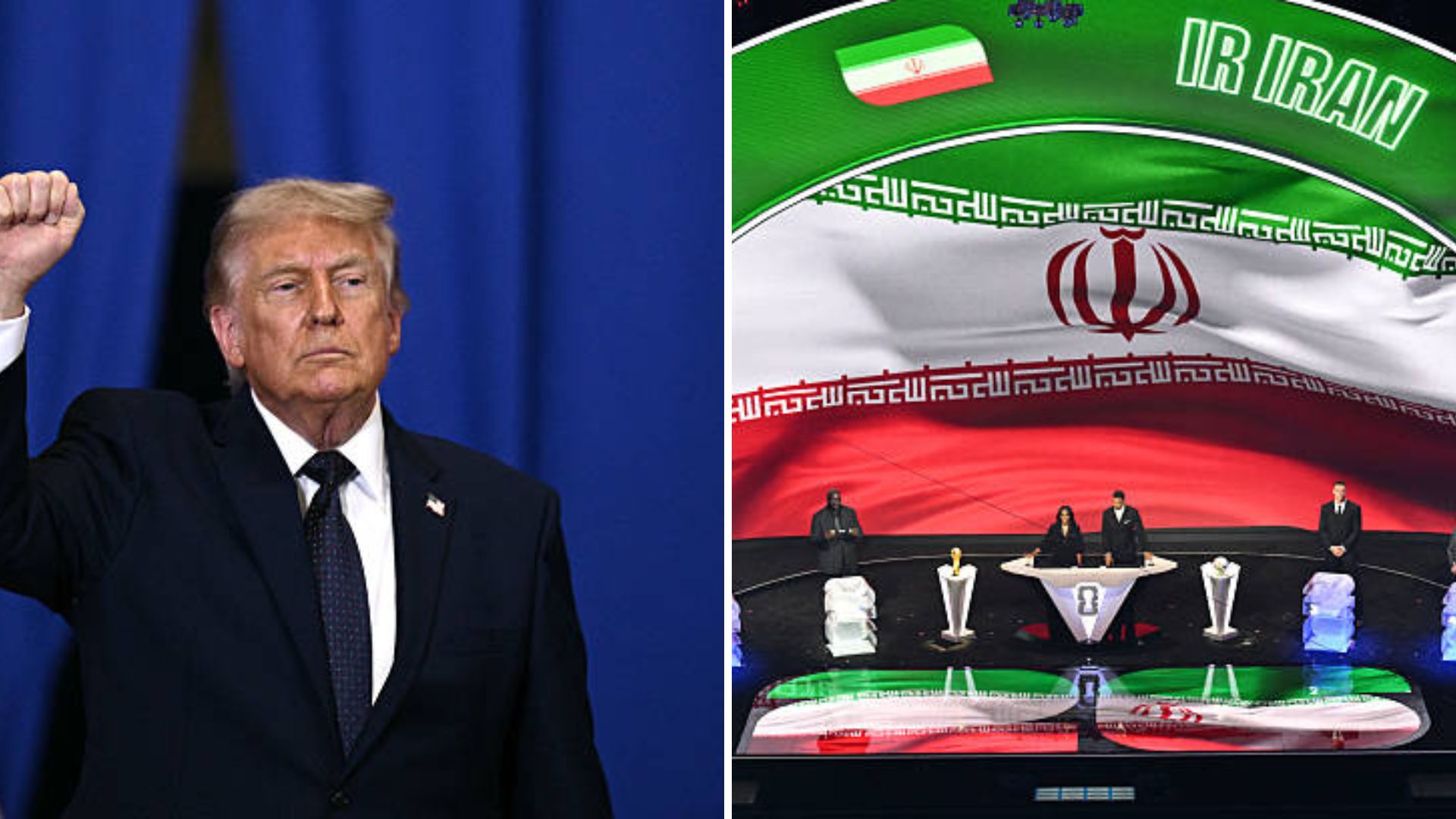
Iran initially boycotted the World Cup draw in Washington after the US denied visas to key officials, including federation president Mehdi Taj. Consequently, only four Iranian delegates, among them head coach Amir Ghalenoei, were allowed into the country for that ceremony.
Fast-forward to today. Players finally received their visas just ten days before their opening match on June 15. However, the relief was short-lived. Iran’s ambassador, Abolfazl Pasandideh, confirmed the team faces a humiliating same-day entry and exit rule.
Specifically, players must cross the US border on match mornings and leave immediately after the final whistle. Meanwhile, a large portion of Iran’s managerial and executive staff still have no visas at all. The Iranian embassy called it “deliberate and discriminatory treatment.”
Among those reportedly denied: the federation’s secretary-general, its media director, and its vice president. Iran’s football federation accused the US of “vindictive behaviour.” Furthermore, a US State Department official made matters worse.
Rather than simply confirming the visa terms, they alleged that the delegation was attempting to “sneak terrorists into the United States under false pretenses.” That accusation, levelled at a national football squad days before a World Cup, is extraordinary.
It is also, Iran argues, completely unfounded. To avoid the chaos entirely, Iran relocated their training base from Arizona to Tijuana, Mexico. FIFA rejected their request to move matches to Mexican soil, as per Al Jazeera.
So instead, Iran must commute across an international border on match day, for a tournament they fully qualified for and have every right to compete in equally. This is not a level playing field. It is not even close.
Beyond Iran: Other concerns are already piling up ahead of the World Cup
Iran’s ordeal is the most egregious issue, but it is not the only one threatening the tournament’s integrity. Japan arrived in Monterrey, Mexico, only to find their allocated training ground at UANL Tigres was uneven, marred by patches of bare dirt.
Reports suggest the Japanese coaching staff were alarmed about injury risks. Crucially, FIFA mandates that participating nations receive top-level facilities throughout the tournament. Japan eventually switched but it raised uncomfortable questions about preparation standards.
Pitch quality at match venues is also a growing concern. Reece James was blunt after the Club World Cup, describing US pitches as “not so good.” Porto’s Ze Pedro made similar complaints after playing at MetLife Stadium. Yes, the same venue set to host the World Cup final.
MetLife’s surface has a notorious history: since 2020, 13 NFL players suffered significant injuries on its artificial turf, including Aaron Rodgers’s infamous Achilles tear. FIFA has installed new grass for the World Cup, with a deeper sand base to improve bounce.
Whether it works remains to be seen. Iraq faced their own visa nightmare, with head coach stranded in the UAE due to airspace closures, while several players and staff could not obtain travel documents in time. Taken together, the picture is troubling.
A tournament that promised to showcase football’s global spirit is instead showcasing geopolitics, unequal treatment, and substandard infrastructure. The ball rolls on June 11. But for many nations, the match has already started, and the odds are far from even.