Premier League
Premier League clubs vote on salary cap – New rule set to be introduced in 2026


Last Updated on 21 November 2025
The Premier League has taken a major step toward reshaping its financial rulebook. Clubs voted to replace the Profit and Sustainability Rules (PSR) with a new Squad Cost Ratio (SCR) system.
But while a new model is coming in for next season, the more controversial proposal, an anchoring mechanism that many believed would introduce a de facto salary cap, was firmly rejected.
The decision follows months of debate over how the Premier League can maintain competitive balance, control spending, and avoid the financial crises that have hit several clubs in recent seasons.
SCR approved, salary cap rejected – Here’s all you need to know
All 20 Premier League clubs met on Friday to vote on three proposals: the Squad Cost Ratio (SCR), a new Sustainability and Systematic Resilience (SSR) framework, and the Top to Bottom Anchoring (TBA) proposal.
According to Sky Sports, the SCR scraped through with exactly 14 votes, the minimum required for approval. The SSR measures were also passed. Both will come into force next season.
However, clubs overwhelmingly rejected the TBA model. That’s the rule proposed limiting spending to five times the amount earned by the league’s bottom club in prize and broadcast revenue. Seven clubs backed the idea, 12 voted against, while one abstained.
The PFA and major player agencies had already warned they were prepared to launch legal action if TBA was adopted, arguing it was effectively a salary cap. Their stance ultimately influenced the vote, with the league choosing not to risk a prolonged legal battle.
Under the new SCR system, clubs will be allowed to spend up to 85% of their annual revenue on wages, transfer amortisation and agent fees. Going above that threshold triggers fines.
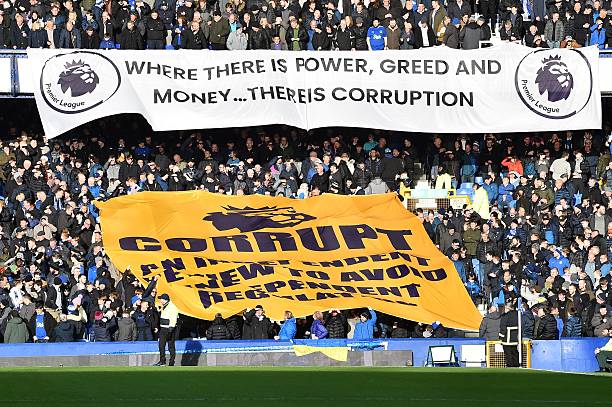
In fact, if a club surpasses the ‘red-line limit’, it would lead to automatic points deductions. Those deductions start at six points, increasing by one for every £6.5m overspend.
How SCR differs from PSR and what it means for clubs
The move from PSR to SCR marks a fundamental shift.
PSR judged clubs on overall profit and loss over a rolling three-year period, leaving clubs exposed to sudden drops in revenue. SCR, however, assesses only on-pitch spending and does so in real time. This allows interventions during the season rather than only afterward.
As a result, clubs will have clearer spending forecasts as revenues will be known before the campaign begins. This reduces the risk of unexpected PSR breaches like those seen over the past two years.
The new SSR tests add another layer, monitoring cash flow, liquidity and long-term financial health. Overall, the Premier League is shifting toward a system aiming to enforce discipline earlier. And more consistently, without crossing into salary-cap territory.