England
They chose a different flag: The players who switched nationalities to reach World Cup 2026

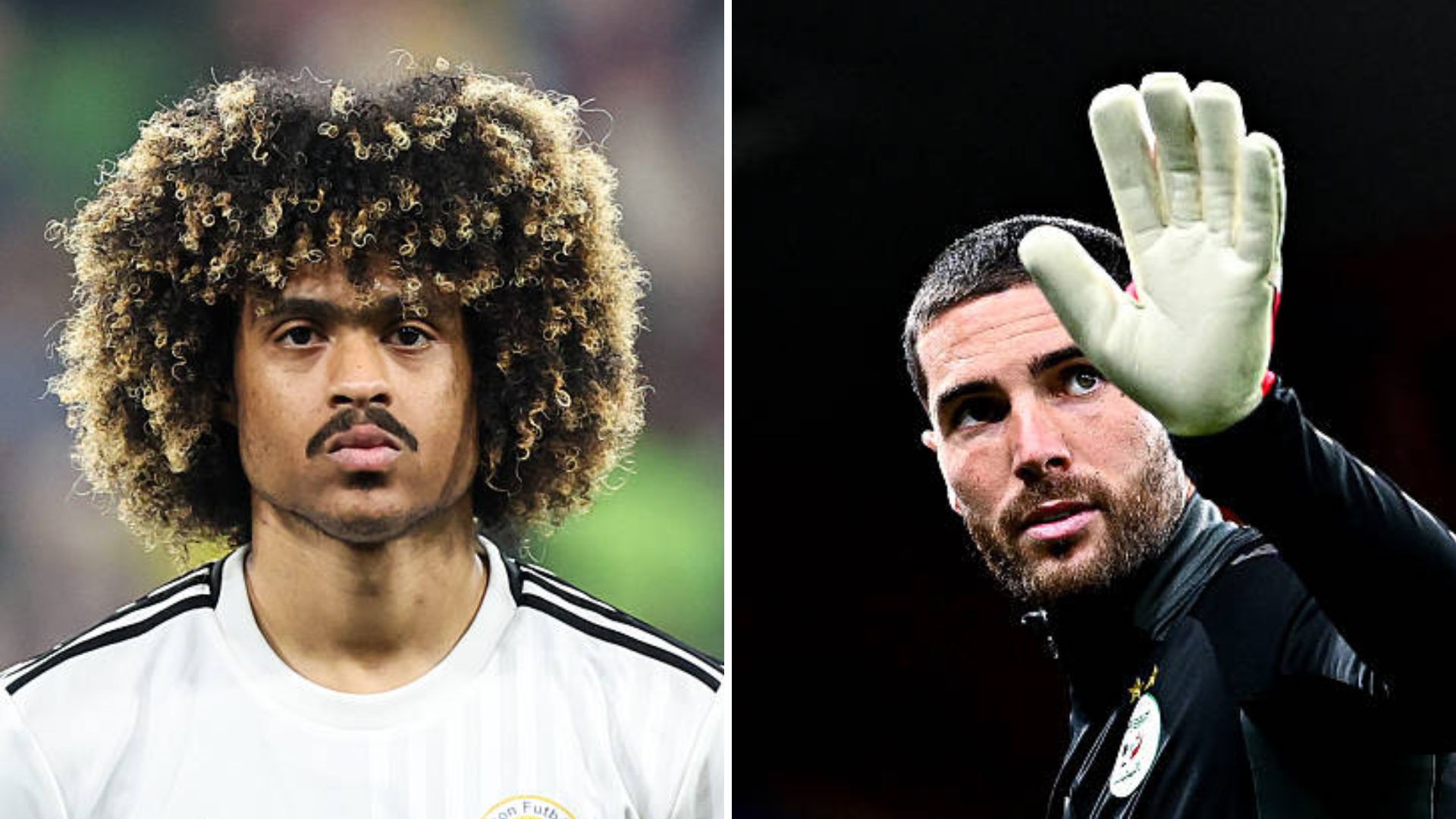
Loyalty in international football has always been complicated. At World Cup 2026, it’s more fluid than ever. Thanks to FIFA’s revised eligibility rules, a wave of dual-national players has chosen to represent smaller, less fashionable nations.
They turned down guaranteed anonymity in stacked squads for a real chance to matter. These are not mercenary moves. Behind each switch is a story of identity, belonging, and a deep need to be seen.
Here are some of the most fascinating ahead of World Cup 2026.
Tahith Chong – Netherlands to Curacao
This is the standout story of the entire tournament. Chong was born in Willemstad, Curacao, but rose through Feyenoord’s academy and then Manchester United’s. He went on to represent the Netherlands at every youth level up to the Under-21s. However, a senior Dutch call-up never came. So he made an extraordinary choice.
In September 2025, Chong switched his allegiance to Curacao. The result? Curacao became the smallest-ever nation to qualify for the World Cup, with a population of just 155,000, defeating Jamaica in the playoff final. Chong didn’t just pick a flag. He helped write a nation’s greatest footballing moment.
Aaron Wan-Bissaka – England to DR Congo
For years, Wan-Bissaka was considered one of the best defensive full-backs in England. Yet England never gave him a senior cap. He was born in England but has Congolese descent, and in 2025, his request to switch his national team to DR Congo was approved by FIFA.
The move paid off almost immediately. DR Congo qualified for their first World Cup in 52 years after a 1-0 win over Jamaica in their intercontinental play-off final. Wan-Bissaka was part of that journey and he goes into the tournament as a starter for a nation making history.
Axel Tuanzebe – England to DR Congo
If Wan-Bissaka’s switch was about opportunity, Tuanzebe’s was personal. He was born in Bunia, a city affected by the ongoing conflict in eastern DR Congo. That connection ran deep. Like Wan-Bissaka, he went through England’s youth system and never received a call-up.
But instead of fading into the margins, he chose his roots. Then he delivered. Former Manchester United defender Axel Tuanzebe netted the only goal in extra time to settle the tie against Jamaica, sending DR Congo to their first World Cup since 1974 and returning to the global stage for the first time in 52 years.
Carney Chukwuemeka – England to Austria
Few switches carry as many layers as Chukwuemeka’s. He was born in Vienna to Nigerian parents, grew up in Northampton, and then became a key player in England’s youth setup. He earned 25 youth international caps with the Three Lions, involved in Euro U19 win in 2022. But no senior call-up followed. So he returned to his birthplace.
His switch was made possible by the fact that he was born in Vienna before his family moved to Northampton when he was a child. Austria qualified for this summer’s World Cup, reaching there for the first time since 1998. Chukwuemeka now links up under Ralf Rangnick, a coach who personally pushed to bring him in.
Luca Zidane – France to Algeria
The name alone carries the weight of football history. Zinedine Zidane won the 1998 World Cup with France. His son Luca, however, took a different path. Luca Zidane, 27, previously represented France at youth levels. He qualified for Algeria through his father’s heritage, as Zinedine Zidane’s parents emigrated from the Kabylie region.
Luca isn’t just filling a squad spot, either. He kept three clean sheets during AFCON matches, including a crucial game against DR Congo, helping Algeria advance through extra time. At the 2026 World Cup, Algeria will start against defending champion Argentina in Kansas City on June 16. Father and son. Same sport. Two very different flags.
Paul Wanner – Germany to Austria
The least-known name on this list may end up being the most intriguing. Wanner, just 20 years old, developed through Bayern Munich’s academy and represented Germany at youth level. Then Austria came calling. Wanner joined the Austrian setup alongside Chukwuemeka.
Rangnick, via Footmundo: “We never put any pressure on them, but we made it clear at all times that we wanted them with us.” Born in Austria with German-Croatian roots, Wanner now plays for PSV and chose a country where he could start over a country where he’d be queuing.