WAGs
The rise of the “Ghost WAG”


Last Updated on 25 February 2026
The age of the paparazzi-magnet WAG, spray-tan glamour, designer hauls, and tabloid feuds, now feels like a relic of the mid-2000s. In its place, a new archetype has quietly emerged across modern football: the “Ghost WAG.”
These partners orbit the sport’s brightest stars while remaining deliberately out of frame. Their absence is not accidental but strategic, reflecting a wider cultural turn toward privacy, discretion, and the understated aesthetics of “quiet luxury.”
In an era where visibility invites scrutiny, the most powerful move is often invisibility. For today’s elite football partners, staying off-grid has become both shield and status symbol.
Privacy is power in a world where everyone knows everything
The Ghost WAG phenomenon is, above all, a defensive adaptation to the digital spotlight. Social media turned partners into permanent public figures, exposed to trolling, speculation, and intrusive commentary that can spill directly into a player’s career narrative.
Modern partners increasingly refuse that bargain. Figures like Laura Iglesias, partner of Ballon d’Or winner Rodri, embody the model: no public profiles, almost no interviews, and a personal life known only in fragments. For years, fans barely knew her name, let alone her face.
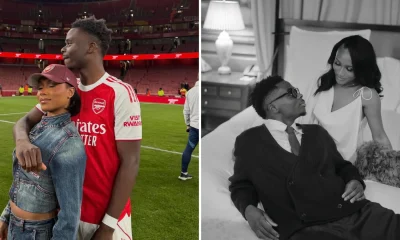
Rodri has even described how she records her reactions to his goals privately for him alone, moments preserved for intimacy rather than content. Others adopt softer forms of invisibility. Tolami Benson, partner of Bukayo Saka, mastered the “soft-launch” long before it became influencer slang.
She appeared at tournaments in carefully styled fanwear yet avoided couple photos or tags, maintaining professional independence while the relationship remained publicly unconfirmed.

Silence, in this ecosystem, becomes control. If there is no narrative to exploit, tabloids lose leverage, and partners reclaim authorship over their own identities.
Status Without Spotlight
The Ghost WAG also reflects a shift in how status is defined within football culture. Visibility once equaled relevance; today, anonymity often signals security. These partners frequently have careers, medicine, media, design, that exist entirely outside football fame.
The marriage of Naima Corbin and Eberechi Eze illustrates this recalibration. Childhood sweethearts, they married in a quiet 2022 ceremony that barely registered in tabloids, an almost radical act in an era of magazine-exclusive football weddings.
Their milestones remain private memories rather than monetized announcements, reinforcing a boundary between career and home life. Even more visible figures now follow similar codes. Katie Goodland, wife of Harry Kane, helped pioneer the “quiet WAG” long before the label existed.
Despite global fame, her presence centers on family and privacy, avoiding celeb circuits and spectacle. When the Kanes relocated to Munich, the transition unfolded with minimal tabloid noise, a stark contrast to frenzy that surrounded England captains’ families two decades ago.