Manchester United
Sir Alex Ferguson: The legacy of the Premier League’s greatest ever manager


There are great managers. There are legendary managers. And then there is Sir Alex Ferguson. A figure so dominant that his shadow still looms over the Premier League more than a decade after his retirement.
Titles have been won, dynasties have risen and fallen, and yet no one has ever come close to replicating the scale, consistency, and psychological authority Ferguson brought to English football.
He didn’t just build teams, he built eras at Manchester United. Sir Alex Ferguson’s legacy is not measured only in medals, but in standards, fear, and an unrelenting obsession with winning.
Sir Alex Ferguson: The relentless winner who never stopped rebuilding
What made Ferguson unique was not just his success, it was how long he sustained it.
From the early dominance built around Eric Cantona, to the Class of ’92 era, to the ruthless 2000s machine powered by Ronaldo, Rooney and Scholes, Ferguson constantly evolved.
Where most managers peak and fade, Ferguson refused to stand still. He dismantled his own great teams before age or complacency could do it for him.
This ability to rebuild without collapse is what separates him from every other Premier League manager. Arsenal’s Invincibles burned brightly but briefly. Chelsea peaked in cycles.
Manchester City have dominated an era but never rebuilt within dominance the way Ferguson did.
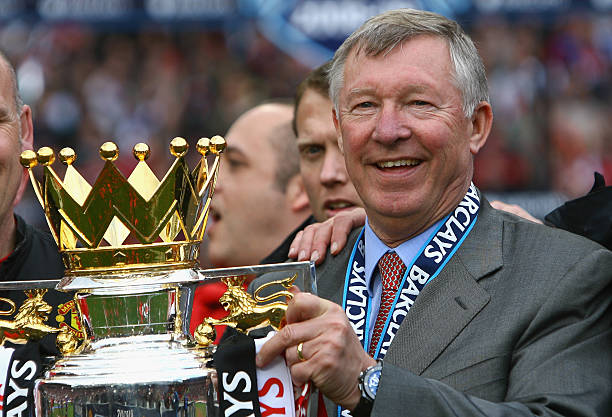
His final masterpiece, the 2012/13 title, may be the greatest managerial achievement the league has ever seen. With a squad widely considered inferior to City’s, and already showing signs of decline, Ferguson still found a way to win the league in his farewell season.
Master of mind games and mental control – Fergie became a serial winner
You couldn’t just beat Ferguson tactically, you had to survive him psychologically first.
He weaponised the media like no manager before or since. Press conferences weren’t information exchanges, they were strategic operations.
Referees felt the heat. Opponents felt the pressure. Even rival managers found themselves dragged into psychological battles before a ball was kicked. And inside his own dressing room, standards were brutal.
No player, not Beckham, not Keane, not even Cristiano Ronaldo, was bigger than the badge. When stars crossed the line, they were removed. Talent was never an excuse for defiance. Authority was absolute.
Ferguson understood something few managers truly master. Elite football is played as much in the mind as on the pitch.

And the numbers remain surreal:
13 Premier League titles, 5 FA Cups, 4 League Cups, 2 Champions Leagues, amounting to 38 major trophies in total. But these numbers alone don’t explain the fear that surrounded Manchester United under Ferguson.
Opponents didn’t just play United to win, they played them to survive until half-time. “Fergie Time” became a cultural phrase for a reason. Late goals weren’t luck. They were the product of belief, pressure, and relentless attacking until the final whistle.
Teams knew that even at 90 minutes, the match wasn’t over.
The manager every successor is still chasing
Since Ferguson retired, as per The Sun, Manchester United have spent close to two billion pounds and cycled through multiple elite managers, yet the club still hasn’t rediscovered its identity.
That alone may be the greatest proof of his legacy.
Ferguson didn’t leave behind a template that could be copied. He left behind a standard that may simply be unrepeatable. Football has changed. Players have more power.
Squads are managed by committees. Authority is divided. Individual managers no longer shape clubs the way Ferguson once did.
He belonged to a different era, one where a single figure could become the soul of an institution.





