Manchester United
How will Michael Carrick line up at Old Trafford? A return to 4-3-3 or a 4-2-3-1?


Last Updated on 12 January 2026
After being dumped out of the FA Cup by Brighton and staring down a campaign with just 40 matches, United now stand at a crossroads. Ruben Amorim is gone. Darren Fletcher’s two-game caretaker stint has delivered chances but not results.
And with Manchester City arriving at Old Trafford this weekend, the club’s hierarchy is preparing to make a decisive call. That call is expected to be Michael Carrick.
Ole Gunnar Solskjaer and Carrick were in the running for the caretaker position. However, recent reports suggest Carrick is the frontrunner. Question is, what will a Carrick-led Manchester United look like in 2026?
Why Michael Carrick is now leading the race for the Manchester United job
Despite early speculation that Ole Gunnar Solskjaer could return for a second interim spell, Michael Carrick has moved ahead of him in the eyes of United’s decision-makers.
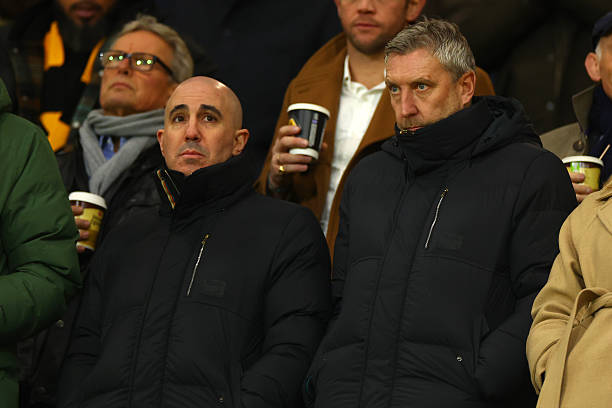
Omar Berrada, Jason Wilcox and the Old Trafford hierarchy are believed to see Carrick as the safer, more modern choice. Not because of nostalgia, but because of his coaching pedigree.
Carrick knows this club inside out. He worked under Jose Mourinho and Solskjaer, staying through multiple transitions, and holding the fort himself during one of the most unstable periods in United’s post-Ferguson history.
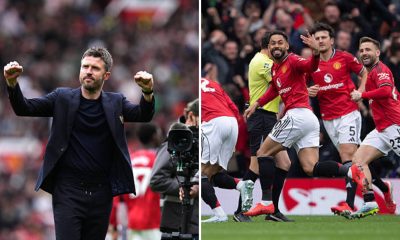
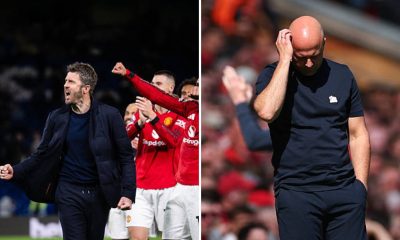
When Solskjaer was dismissed in November 2021, Carrick took charge for three matches and did not lose once. He beat Villarreal away in the Champions League, drew away with reigning European champions Chelsea, and defeated Arsenal at Old Trafford.
More importantly, those games showed something United have often lacked since: control. Carrick famously benched Cristiano Ronaldo at Stamford Bridge, but his former teammate admitted that Carrick had the makings of a top manager.
United are in the midst of another long transition and Carrick represents the bridge between the club’s past and a more structured future. He understands the dressing room and understands the expectations.
Michael Carrick’s tactical identity: control, structure and inverted fullbacks
Where Carrick truly separates himself from the other candidates is in how his teams actually play.
At Middlesbrough, Carrick built a side around a possession-dominant 4-2-3-1, which was designed not for sterile control but for positional superiority.
In possession, Carrick would routinely invert one full-back into midfield while pushing the other high. This transformed his back four into a 3-2-4-1 shape.
It is a structure lifted straight from the elite level. Pep Guardiola uses at Manchester City and Mikel Arteta at Arsenal. For United, that matters.
Players like Noussair Mazraoui are tailor-made for that tucked-in role. He can step alongside the centre-backs to form a back three in buildup.
On the opposite side, an attack-minded full-back such as Diogo Dalot or Patrick Dorgu would be unleashed high up the pitch. This helps in creating overloads and giving United an extra attacker between the lines.
Ahead of them, Carrick’s system gives natural freedom to the club’s creative core. Bruno Fernandes would operate closer to goal rather than buried in deep build-up, while Matheus Cunha could drift inside from the left to play closer to Benjamin Sesko.
Perhaps most importantly, Carrick’s 4-2-3-1 allows Kobbie Mainoo to play where he is most effective: as part of a double pivot that controls tempo rather than being dragged into chaotic pressing schemes.
And against Manchester City, these details will matter.
Predicted Manchester United XI under Carrick vs Manchester City
If Carrick is confirmed in time for the derby, expect him to stay loyal to the 4-2-3-1 that defined his Middlesbrough sides.
Predicted XI (4-2-3-1)
GK: Senne Lammens
RB: Diogo Dalot
CB: Lisandro Martinez
CB: Ayden Heaven
LB: Luke Shaw
DM: Kobbie Mainoo
DM: Casemiro
RW: Amad Diallo
AM: Bruno Fernandes
LW: Bryan Mbeumo
ST: Benjamin Sesko
In possession, this would not look like a flat 4-2-3-1. Instead, Shaw would tuck inside alongside Martinez and Heaven, forming a three-man defensive base, while Dalot pushes high on the right to create width.

That movement would free Mbeumo and Diallo to drift into the half-spaces next to Sesko, turning United’s attack into a narrow, aggressive front line, ideal for pinning City’s centrebacks and attacking the channels behind their high defensive line.
Behind them, Fernandes would finally be allowed to operate as a pure No.10. He could feed runners and press City’s pivot in transition. While Mainoo and Casemiro form the platform that protects United against City’s midfield rotations.