Exclusives
How VAR has completely changed football – The good and the bad and the ugly


Last Updated on 11 November 2025
When the Video Assistant Referee (VAR) system was introduced to football, it promised fairness. The goal was simple: eliminate “clear and obvious” errors and bring justice to the world’s most passionate game.
But several years on, the debate still rages. Has VAR improved football, or has it stripped away part of what makes it beautiful?
Let’s break down how VAR has completely changed the Premier League and the wider sport, for better and for worse.
The Good: Fairer outcomes and accountability
At its best, VAR has done what it was meant to do, bring clarity to chaos.
Blatant offsides, unseen handballs, and last-minute penalty shouts that once sparked outrage can now be corrected in seconds. In crucial moments, title deciders, relegation battles, cup finals, that level of fairness matters.
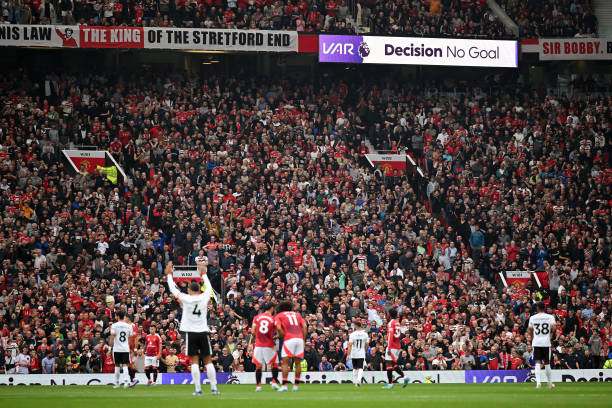
It’s also made referees more accountable. Every decision is recorded, every call reviewed, every error dissected. That transparency has raised standards and reduced some of the worst injustices that used to dominate post-match headlines.
And when it works smoothly, VAR adds a layer of reliability. You know your team is not going to get robbed blindly due to a human error because there are people reviewing every action.
But that is not how it works out every time. Referees continue to make headlines even now…
The Bad: Technology can’t erase human error
The harsh truth? VAR hasn’t eliminated controversy, it’s just moved it to a new layer.
For all the technology, humans are still interpreting the images, drawing the lines, and making the final calls. So even with all the slow-motion replays, subjectivity still rules.
We’ve seen it repeatedly, initially with the wrong angles drawn for offsides then with the missed fouls in the buildup, and “clear and obvious” errors that still split opinion in half. The technology is sound; it’s the human element within it that remains flawed.
In fact, it infuriates fans a lot more to see referees misusing the technology even when they have the gift of hindsight. Unlike before, when wrong decisions were tough to take but at least there was sympathy that football moves so fast, it’s only human to miss a few things.
Football’s greatest strength has always been its humanity, the passion, the imperfection, the chaos. Ironically, even VAR can’t take that away completely.
The Ugly: Killing the emotion and the flow
For all its good intentions, VAR has also changed football’s rhythm.
The game used to be an emotional rollercoaster. Instant highs, crushing lows, and raw spontaneity. Now, goals are met with hesitation. Every celebration comes with a side of anxiety, every roar followed by a nervous glance toward the referee.

It’s the loss of immediacy that stings the most. That human explosion of joy, the heartbeat of football, is slowly being replaced by sterile pauses and drawn-out reviews.
Even when the right decision is made, something is lost in translation: the soul of the moment.
The Verdict: The game’s new reality
VAR is here to stay, and perhaps it should be. It’s a tool, not a cure, so maybe it does deserve more time.
The challenge for football is learning to balance precision with passion, ensuring that in chasing fairness, it doesn’t lose the very magic that makes it special. Love it or hate it, VAR has changed how we watch, celebrate, and argue about football forever.